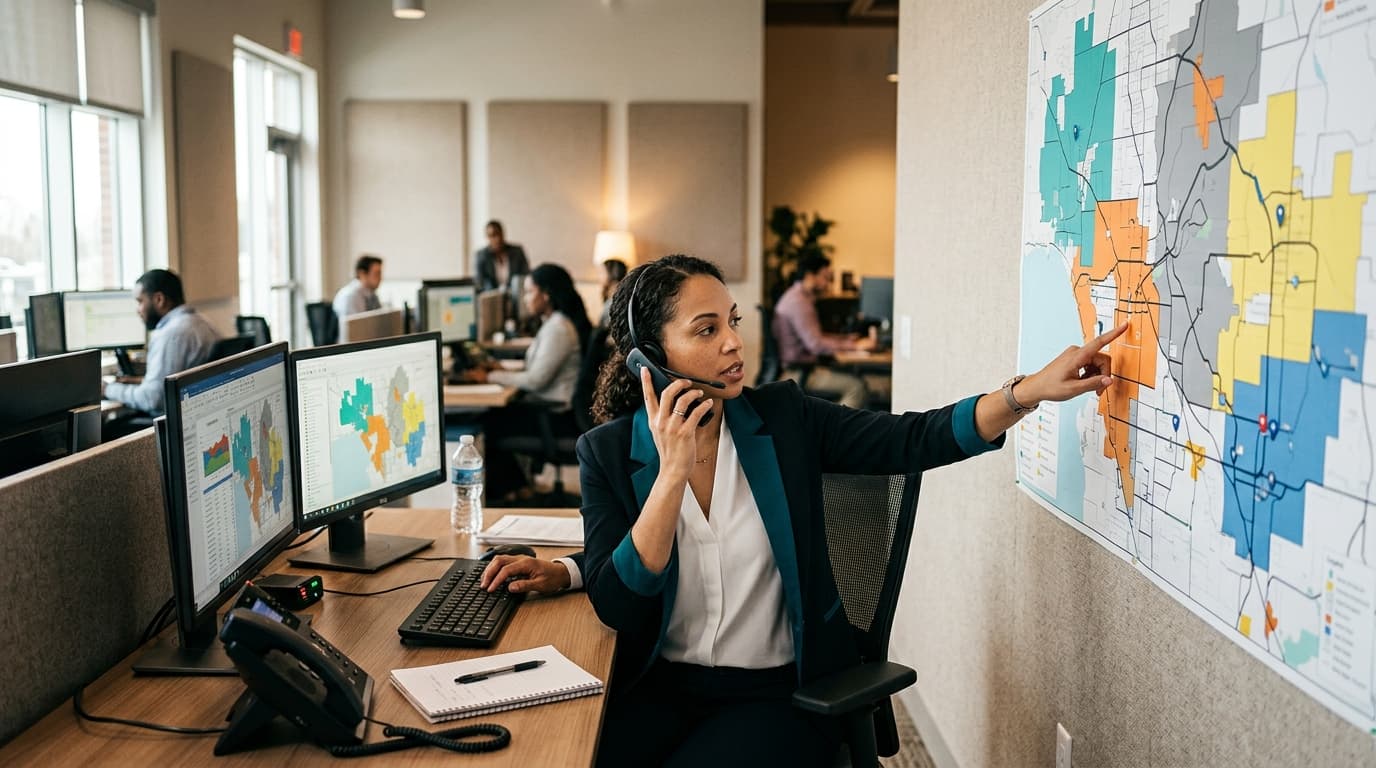
AnsweringServiceStaff helps businesses capture 1 more answered call at the moment it matters, and multi-location call routing is one of the clearest ways to reduce voicemail loss without overstaffing.
Managing customer calls efficiently across multiple business locations presents a unique challenge, but it's crucial for delivering consistent service. There are four primary methods businesses can employ to route calls effectively, ensuring every customer reaches the right department or location. Implementing a robust multilocation call routing strategy significantly enhances customer satisfaction and streamlines operations.
AnsweringServiceStaff helps businesses navigate these complexities with expert solutions.
multi-location call routing
Multilocation call routing is the process of directing incoming calls to the most appropriate destination within a business that operates in more than one physical area. This system ensures that callers are connected to the correct branch, department, or specialist based on predefined rules. Effective routing is vital for maintaining high customer service standards and operational continuity across all locations.
Poor call routing can lead to frustrated customers, missed opportunities, and inefficient use of staff time. By contrast, a wellimplemented system improves response times and ensures every call is handled by the right person. This is especially important for businesses that need to provide localized support or specific service offerings.
Key Strategies for Call Distribution
Businesses have several strategies for routing calls across multiple locations, each with its own advantages. The best approach often combines multiple methods to create a comprehensive system. Understanding these options is the first step toward optimizing your communication flow.
Here are common strategies used in multilocation call routing:
| Strategy | Description | Best For | | : | : | : | | Geographic Routing | Directs calls based on the caller's area code or the location they select. | Businesses with distinct service areas or local branches. | | TimeBased Routing | Routes calls differently based on the time of day or day of the week. | Companies with varying hours of operation across locations. | | SkillBased Routing| Connects callers to agents with specific expertise or language skills. | Businesses offering specialized services or multilingual support. | | IVRBased Routing | Uses interactive voice response (IVR) menus for callers to selfdirect. | Highvolume businesses needing to filter calls efficiently. |
Geographic routing ensures customers speak to someone familiar with their local needs. Timebased routing can direct afterhours calls to an answering service or a different location. Skillbased routing ensures complex inquiries are handled by qualified personnel.
Benefits of an Optimized Routing System
An optimized call routing system offers substantial benefits beyond just directing calls. It plays a critical role in enhancing overall customer experience and improving internal efficiencies. Businesses that invest in smart routing often see a measurable return.
Key benefits include:
- Improved Customer Satisfaction: Callers reach the right person faster, leading to less frustration and better issue resolution.
- Increased Operational Efficiency: Staff can focus on their specific tasks without being interrupted by misdirected calls.
- Reduced Call Wait Times: Strategic routing minimizes hold times, improving the overall call experience.
- Enhanced Professional Image: A seamless call experience reflects positively on your business's professionalism and reliability.
- Better Resource Utilization: Agents with specialized skills are used more effectively, handling relevant inquiries.
These advantages contribute to stronger customer relationships and a more productive workforce. Efficient call management helps businesses avoid scenarios where they might lose clients to voicemail.
Implementing Advanced Call Routing Solutions
Implementing an advanced call routing system requires careful planning and the right technology. Businesses can choose between in-house solutions or partnering with an external provider. The goal is to create a system that is both robust and flexible.
Steps for successful implementation often include:
- Assess Current Needs: Analyze your existing call volume, customer demographics, and service locations to understand requirements.
- Define Routing Rules: Establish clear rules for how calls should be directed based on location, time, caller input, or agent availability.
- Select Technology: Choose a call routing platform or provider that offers the features and scalability your business needs.
- Integrate Systems: Ensure your new routing solution integrates with existing CRM, scheduling, or message routing tools.
- Train Staff: Provide comprehensive training to your team on the new system and their role in the call flow.
For more information on telecommunications regulations and consumer rights, you can consult resources from the Federal Communications Commission.
Partnering for Seamless Call Management
For many multilocation businesses, managing complex call routing internally can be resourceintensive. Partnering with an expert answering service offers a streamlined solution. These services specialize in handling diverse call flows and ensuring every customer interaction is professional.
AnsweringServiceStaff provides comprehensive live call answering services tailored for businesses with multiple locations. Our virtual receptionists are trained to follow precise routing protocols, directing calls to the correct department or branch. This ensures that your customers always reach the right place, whether for general inquiries or specialized support intake.
By leveraging an answering service, businesses can offload the complexities of call management, freeing up internal staff to focus on core operations. This partnership ensures consistent, highquality customer service across all your service areas. It's an efficient way to enhance your communication infrastructure without significant capital investment.
FAQ
What is multilocation call routing?
Multilocation call routing is a system designed to direct incoming calls to the most appropriate branch, department, or agent based on various criteria. This ensures that customers with specific needs or geographic locations connect with the correct resource efficiently.
How does multilocation call routing benefit my business?
It significantly improves customer experience by reducing wait times and ensuring callers reach the right contact on their first attempt. This also boosts operational efficiency, allows for specialized service delivery, and supports business growth across different areas.
Can I route calls based on specific services or departments?
Yes, advanced call routing systems allow for skillbased or departmentspecific routing. Calls can be directed to agents or locations best equipped to handle inquiries about particular services, products, or support needs, enhancing specialized customer care.
When should I consider an external answering service for call routing?
Consider an external answering service like AnsweringServiceStaff when managing high call volumes, afterhours calls, or when your internal team lacks the capacity or technology for sophisticated routing. This can provide seamless coverage and expert handling without significant in-house investment.